Sunday, 19 July 2009

Emerging Churches - More Wesleyan than the Methodists?

In recent times I've had the opportunity to attend a FORGE conference and get my hands on some material by Hirsch and Frost, and essentially get a bit more up to date with the whole "emerging church" movement.

Much ink has been spilled over reservations about the whole movement, particularly over their interactions with more "traditional" mainline churches. I share the sentiments of many others (Glen has written some excellent comments here), feeling that they have many good things to offer, but do often come across as being a bit arrogant in the simplistic neglect of tradition. Nonetheless, I'm inspired by their commitment to serious discipleship (something which has definitely lapsed in many churches) as well as their intense missional focus, particularly in their service to the poor.

No doubt there are some questionable characters in the movement (I'm not a fan of McLaren), but amongst the more balanced people, I've been interested to find how much they have in common with the spirit of Wesleyanism. For example, in The Shaping of Things to Come, Hirsch and Frost write:

...what the church needs to find its way out of the situation it's in at the beginning of the 21st Century, is not more faddish theories about how to grow the church without fundamentally reforming structures. What the church needs is a revolutionary new approach.

They advocate that the church need to restructure itself around the concept of mission (rather than worship, which is very prevalent today), on the basis that:

...the missional church represents God in the encounter between God and human culture....it is a visible manifestation of how the Good News of Jesus Christ is present in human life and transforms human culture to reflect more faithfully God's intentions for creation.

In other words, our construct of ministry and mission should not and must not be centered within what we call "Church". "Ministry" is not just about ushering, leading worship or playing the piano - it is also very much (and more so!) about MISSION - our engagement and interaction with the world the other 6 days of the week. For many, it is thus lamentable that church structures and organisations are so church-centered - we encourage people to attend prayer meets, cell groups, sunday schools, choirs, courses, seminars, workshops, meetings, etc, hence effectively taking people OUT of their community and keeping them IN the Church.

Hirsch and Frost see this church centered functioning as a logical outcome of "traditional" ways of church organisation and institutionalisation, and hence call for a radical restructuring of our churches, at points calling us to return to "primitive" Christianity.

What struck me was how similar this sounded to the Wesleys as they began their ministry. Chilcote, in The Wesleyan Tradition, comments on the Wesleys' beliefs:

The church of England in the Wesleys' day was an institution in need of repair...It had become distant from and irrelevant to the world it was called to serve during a time of tremendous change. Its forms and its structures had become so inflexible and devoid of life that the weight of its "institutionalism" was quenching the Spirit, suffocating the life of God's people....It needed to rediscover itself and reclaim its identity as God's agent of love in the world. The Wesleys believed that God raised them up to resuscitate the church.

Commenting on the Wesleys' understanding of the function of the church, he says:

Their ecclesiology (understanding of the church), therefore, was essentially missiological (formed around mission)... All of their energy was directed toward the empowerment of Christ's fiathful disciples in ministry to God's world. Indeed, they all viewed evangelism and mission...as the reason for their existence.

Given that the Methodist Church today has become more well known for being "Methodical" (in terms of beauracracy and red tape, rather than in the pursuit of holiness), I can't help but wonder whether the much maligned "Emerging Church" movement actually better embodies what it means to be a Methodist than many Methodists, by demonstrating a stronger passion for a more missional, discipleship oriented, and contextual approach to church life.

However, perhaps more importantly, how do we as a church rediscover what it means to be "missional" - what sacrifices and pains will it take, and will we take them?

Wednesday, 15 July 2009

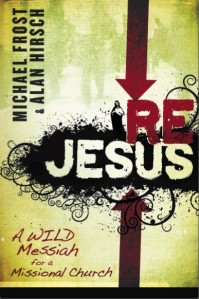
Review for "ReJesus - A wild messiah for a missional Church' by Hirsch and Frost


Hirsch and Frost are concerned only with 1 word - J.E.S.U.S. Call them what you may, but their premise is simple: the modern western church has strayed far from the teachings and values that its founder Jesus Christ embodied - he has been domesticated to fit our agenda. Echoing characters such as Barth, they declare that Christ must remain central in the faith, as nothing can be known/felt/done apart from Christ himself. To make their point, they go through 7 chapters that discuss (in order): how Jesus impacts theology/missiology/ecclesiology, how he impacts individuals and how he impacts communities. They explore the false images we've made of Jesus, and how the Shema provides a holistic model for discipleship in the form of monotheistic ethics. They go on to discuss the importance of intersecting orthodoxy, orthopraxy and orthopathy, and finish off with a discussion on ecclessiology (which is admittedly very functional).

In general I'm quite wary of these kind of books (that proclaim that 'everyone is wrong and we just need to get back to basics'), as they often have a blaise disregard for the value of tradition and history. The authors constantly affirm the value of tradition, thankfully, but provide few insights into how this may be reinterpreted in the context of a renewed Christologic focus, so as to avoid throwing the baby out with the bathwater.

This, however, does not hurt their main, and very timely message - that we need to rescue the gospels (and Christology) from the dungeons, and place them and their central figure back at the center of our existence as the church. In doing this, they rightly argue, the church will rediscover what it means to be "missional", in every sense of the word, as they embody the values of their Lord. Rather than the tame, gentle, huggable, nice lady-like Jesus of our paintings, they present a challenging, radical, loving, confrontational, non-conformist and passionate Jesus. This they do very well, with a good mix of anecdote and story to add some personal flavor to their writings, leaving one with the challenge to read the Gospels more intently, keeping our eyes and heart open to the person they testify to.

Ironically, the book is short on the very material it seeks to promote - Christology. There's plenty of discussion around the impact that Christology would have, but not much exploration of the man himself - but perhaps that is too much of an ask for a book only 200 pages long! In addition, attempts at serious theological reflection (such as the section on ecclesiology) are pretty flimsy, but then again, this book is more about the importance of prioritising Christology than an actual discussion of the subjects themselves.

All in all, ReJesus is a good read that will no doubt stir the reader to rethink and reflect on putting the Christ back into being Christian, and learn to read the gospels more robustly, leading to a reinterpretation of the identity of the church. In a sense, what Barth did as a theologian, Hirsch and Frost are doing as missionaries. It gets pretty draggy and repetitive at points, but remains a great starting point for discussion on ministry.

Thursday, 2 July 2009

Biblical Preaching by Haddon Robinson


This book is immensely practical - it takes you on a step by step journey through the preparation and delivery of sermons. It covers topics ranging from selection of a text and its exegesis, to the development of a homilectical theme, and finally to the to nuances and issues in delivery of the message (Eg: body language, voice etc).

The breadth of topics Robinson tries to cover seems intimidating, and one wonders whether the book becomes a jack of all trades, without really detailing any particular step. Robinson however makes up for this, by ensuring maximum clarity by keeping the points simple, and filling the pages with examples. He also makes it a point to direct the reader to more indepth resources at the each chapter, if one wishes to pursue it. More worked examples, however would have been useful.


One glaring deficiency in the book, however, is how a clear theology of preaching is not outlined. Although the book sets out to be more practical than theoretical, it would not have hurt to have discussed the biblical and theological basis for speaking the word of God (beyond the few paragraphs mentioned in the introduction and the final chapter).


All in all, this stands as a clear and valueable introduction to the preparation and delivery of sermons. Whilst you won't get a comprehensive exploration of preaching ministry, you will be getting a solid, and all-round guide to get started in this ministry.

Sunday, 21 June 2009

So I watched Constantine...


A bit of an oldie I know, but I never got round to watching it. On the whole, I'll say it's a pretty bad movie - crappy plot, and filled with horrible theological concepts (kind of like those movies that potray Chinese as yellow skinned slanty eye people with pig tails?).

Anyway, there were actually 2 bits in the movie that I liked (spoilers ahead):

1. When Gabriel pins Constantine to the ground, he/she/it (angels are neuter) comments on how humans just need to repent to enter into the bosom of God, and how privileged and loved we are above all of God's other creations. It then caps it off by saying "It's not fair".

At this point I was groaning from the badness of the movie, but this little bit perked me up a little, simply because it reflected the awesome theological truth - that the Son of God should give His life for fallen humanity, that He should take on the form of the human and no other creature. Yes God loves His creation, but there is little doubt that humanity has a treasured place in that. And furthermore, at the end of the day, the Gospel of Jesus Christ ISN'T fair - in no way is there any "fairness" in us being reconciled to God by the suffering of God Himself!

2. As Lucifer tries to drag Constantine to hell as punishment for his sin, God stops him in his tracks and lifts Constantine to heaven, much to Lucifer's chagrin. At this point, Constantine gives Lucifer the birdie, and was really a LOL moment for me.

You see, I couldn't help but reminded of how we often get caught up into appearance and etiquette, thinking that God is looking out for the well mannered nice person, but has no interest in the ruffian who swears and is ill mannered. But at the end of the day, we come back to the parable of the Good Samaritan, where the evil, uncouth Samaritan is praised as living closer to God's command to "love thy neighbor", than any of the Jews coming before him.

It's so tempting to measure holiness (particularly in our conservative Chinese church) by, in a sense, "niceness". Yet, perhaps God is sometimes less concerned about whether you are nice and polite, than whether you are living out His command to love God with all you've got, and love your neighbor like yourself.

Saturday, 13 June 2009

A Review of God's Politics: Why the Right is Wrong and the Left Doesn't Get it

"We are the one's we are waiting for" - this pretty much sums up what Wallis is arguing for in this book: a desire for the church to rediscover it's duty to engage with society, and push for social reform on critical issues of peace, justice, international aid, etc. Whilst the mention of 'politics' and 'God' is bound to raise suspicion given the necessity of the separation of Church and state, Wallis is clear to emphasize that he is not promoting the development of a "Christian nation (as some fundamentalists insist on)", but the development of a political stance amongst Christians that is congruent with the values of our faith, achieved not through coercian but through accepted means.

The book is targeted at Christians, and discusses the foundational concern that (in the US at least) religion has been hijacked by political groups for their own means. Christians are often pressured to believe that if they want to be faithful, they MUST vote for the republicans, as if God is pro-war, pro-rich, etc. On the other hand, the democrats have been fearful of touching on the matter of religion, thus alienating an otherwise significant voting group. Wallis attempts to point out how Christians have to lift themselves out of the "Left" vs "Right" dichotomy, and begin to establish a politic that reflects scriptural values, such as that of the family, whilst being progressive in engaging with society, such as caring for the poor, fighting racism and sexism, etc.

Wallis calls Christians to step out from apathy, to begin engaging with their role as responsible citizens who have to speak as a common voice, and hold politicians to account on their commitments. Through the use of multiple case examples, he demonstrates that when Christians and other religious folk band together on moral issues, such as black civil rights and the abolition of slavery, their voice over time is heard by the powers at large, and that change can come.

The main downside of the book is that it seems a little self indulgent at times and repetitive. Wallis inserts one too many examples of how he and some other leaders wrote this letter, made this statement or did this work. On the other hand, these little snippets do provide some thought as to how Christians can speak up about these issues. Even then, he doesn't spend enough time fleshing out the alternatives to the abuses that are seen daily in the political arena. In addition, Wallis does ignore the (thankfully rare) scenario where evil just meets any attempt at meaningful engagement face-on with a hammer. However, I suspect that Wallis' approach is something meant for the Church in a democratic environment, rather than in an oppressed one.

On the whole, God's Politics makes a fascinating read for Christans who are thinking about how their faith interacts with their public life - to neither divorce them nor create a false simple unity. Whilst it seems to wander a little bit, by the end of it the reader is left with a sense of hope (a rarity in these discussions), that the Church can continue in the footsteps of other "prophetic" voices such as Martin Luther King and William Wilburforce, to make a meaningful impact on society.

Friday, 8 May 2009

A review of "Medicine as Ministry" by M. Mohrmann

First off, it is worthwhile to note that Mohrmann is one of the few people who have the background, experience and training to write a book about theological ethics and medical practice - she is shared between a professorial chair of paediatrics, and an associate professorial chair in religion, at the university of virginia. Thus, unlike many doctors who do not have the breadth of knowledge/reading to comment in an indepth fashion on ethics, or the theologians who largely remain strangers to the world of medicine, Dr Mohrmann is able to unite the best of both worlds, and hence what she says has a very practical, yet deeply reflective element to it.

On to the book - this is not an exaustive treatise on biomedical ethics. As the title "reflections on suffering, ethics and hope" suggests, it is a book exploring what it means to be a doctor in a suffering world, and how we react to it.

Rather than offering a case-by-case discussion of the various areas of controversy, Mohrmann chooses instead to focus on the question of what "ethics" means to christians, and where this "ethics" comes from. The book, in rough order, reflects on the meaning of the trinitarian God for ethics, and necessity of engaging with the rich narratives of our patients' lives in order for medical practice to truly reflect what God intends it to be. Her arguement centers much on the narrative nature of human experience, and the need for broader engagement with the community of a patient for true healing to occur.

This book is more thought provoking than answer giving, as Mohrmann freely challenges our views of health, life and dying, even suggesting that we have idolised life itself. Nonetheless, Mohrmann is able to keep the book thin and make it a light read (I finished it 3-4 hours).

People looking for straightforward analyses of specific moral dilemmas and answers to life questions need not read this book - it is meant to stimulate thought on approaching our ethics differently, and in the process of doing so, enable us to fulfill the commandment to love our neighbours more meaningfully.

Wednesday, 29 April 2009

On Swine Flus, SARS and perspective

This article from The Age pretty much sums some of the things going through my mind as people squeal in fear from the possibility of a pandemic from the H1N1 flu outbreak that will kill us all:

http://www.theage.com.au/opinion/fears-distorting-reality-20090429-ancz.html

Some extracts:
...why do the deaths of only some people from obscure diseases cause us to panic? And how can we be so unfeeling when we have the power to save the lives of millions by relatively simple, inexpensive precautions and treatments?....

...it seems that only when we perceive that infectious diseases threaten "people like us" do we respond with real urgency. The millions killed by TB, AIDS, malaria and other mass killers are doomed to fit the stereotype of people who live and die like that. We can accept it as the way of the world. Aboriginal Australians are just as much victims of the indifference that flows from such stereotyping.

In all reality, we only have 7 confirmed deaths from the Swine Flu (based on WHO analyses - Mexican databases aren't exactly stellar), in a country that is known for its gross inequities and dodgy standards of health and living. In contrast, the normal flu kills 250-500,000 people a year, of which 2000 are in Australia. Yet, all of the sudden, we have the leaders of the known world speaking up and declaring that they will spare no expense to contain this outbreak.

I admit the need for an effective public health response, and even acknowledge that there is more to gain from stoking people's fears and insecurities, hence keeping them on the alert, as compared to calming them. It's good to take appropriate measures at disease containment, for epidimiological reasons, but probably more so for political ones (this is already turning into opportunities to score political points if you read the news).

However, despite all the fearmongering about it being the "next big pandemic" and how we are "overdue for a massive outbreak"that "threatens the existence of humanity", in all likelihood this H1N1 virus thing is going to become something of the past, just as SARS did. Does anyone remember the HK flu from the 1960s that killed over a million people worldwide-no? In addition, the world of international communications and public health is incredibly different from what it was in the century of the last pandemic. Just google something like "Developments/achievements in the last 50-100 years" and you'll see what I mean (this includes the internet btw).

And so I come back to my original point - lots of fearmongering and scares at "possibilities" that are in reality mere shadows, revealing a distinct lack of perspective on disease and illness. This is in stark contrast to our ignorance at the daily epidemics and massive numbers of deaths in poorer nations around us. I believe these events do something more than threaten the health of us all - they reveal the hypocrisy and lack of perspective in our lives, how we spend with reckless abandon at anything that immediately threatens our welfare, but live in gleeful ignorance what happens beyond our own world (I'm just as much guilty of this). I cannot help but think about God's anger - not expressed through disease as a punishment, but against us, for our indignancy, and our love for evil, not good.

PS: For those who are freaked out by the WHO near declaration of a pandemic - look up the definition first, see see how vague it is. The only thing that separates a "pandemic" from something like the normal flu, is the fact that it's new to populations.